Berberine is an alkaloid found in several plants, including Berberis aristata. It has been used in traditional medicine for centuries, and in the last two decades it has become one of the more studied plant compounds in metabolic health.
The mechanism
Berberine activates AMP-activated protein kinase, or AMPK, an enzyme that acts as a cellular fuel gauge. When AMPK is switched on, cells shift toward using energy rather than storing it. That is the mechanistic basis for the research on glucose handling and lipid profiles.
Dose and timing
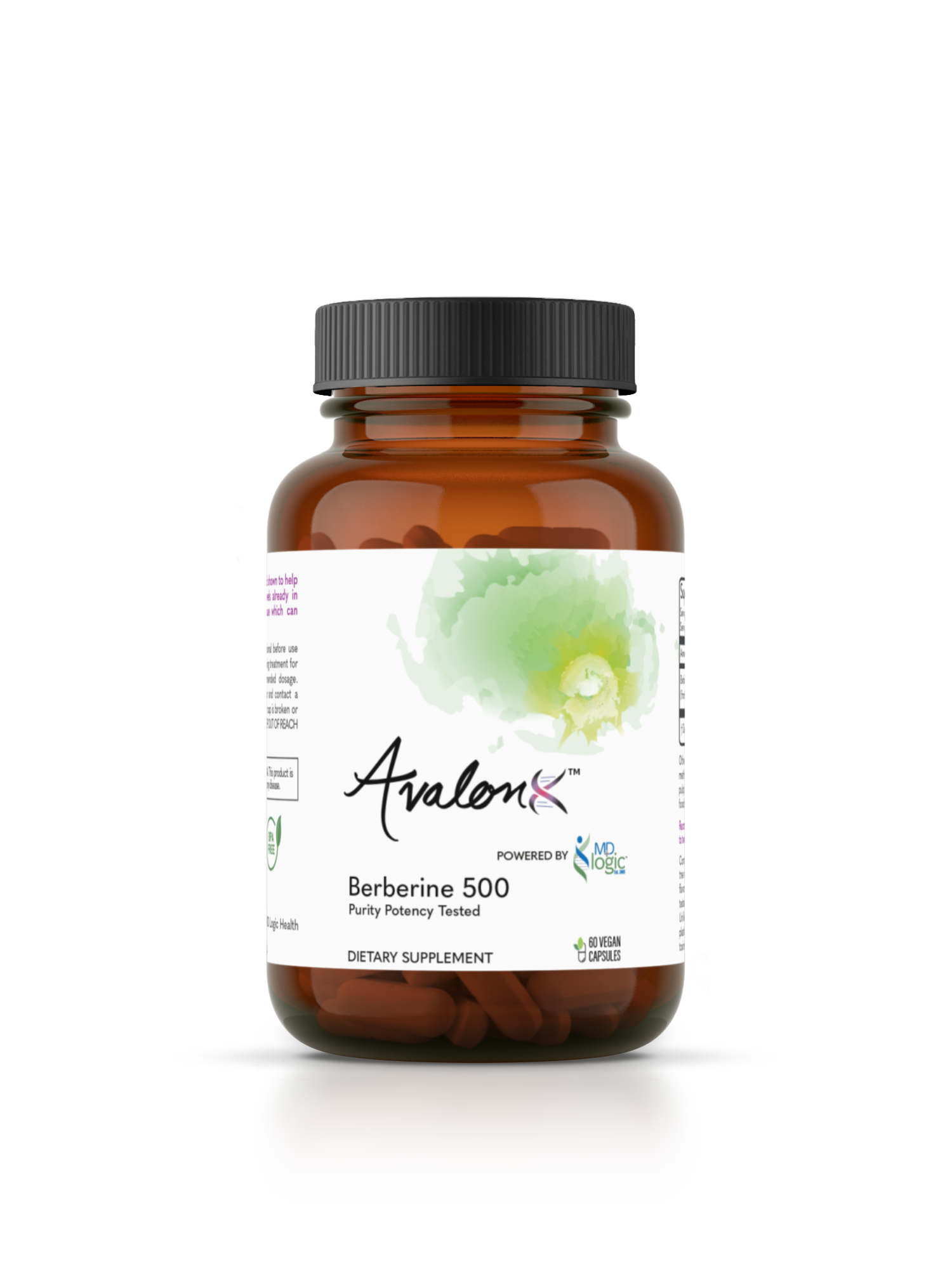
Human studies have typically used 500 mg one to three times daily, taken with meals. Splitting the dose is common because berberine has a short half-life. AvalonX Berberine 500 delivers 1000 mg per two-capsule serving, so the dose can be split or taken together depending on your practitioner's guidance.
Why purity and potency testing matters here
Berberine's raw material can be costly to produce, which is part of why independent purity and potency testing matters for this ingredient. Testing helps verify both identity and dose. Ask whether a brand is third-party tested for contaminants, and if it cannot answer the question, that is worth factoring into your decision.
Read next
Sources
All the good stuff. No noise.
This article is for educational purposes only and is not medical advice. Consult a qualified healthcare practitioner regarding supplements, medications, or health conditions.